
From Form Fills to Buyer Signals: How The Shelf Lowered Cost per Buyer-Oriented Lead by 48%

A Spike AI case study on paid-search signal quality and lead categorization
Client: The Shelf | Channel analyzed: Google Ads / paid search | Comparison: 2025 baseline vs. Jan 8–Apr 30, 2026 post-launch window
Executive Summary
The Shelf combines social-first strategy, proprietary technology, and performance-driven execution to help brands turn creator marketing into measurable business growth. To further refine paid-search optimization, The Shelf engaged Spike AI to help improve how paid-search form fills were interpreted by adding lead categorization before conversion success was sent back to their CMS and ad platforms.
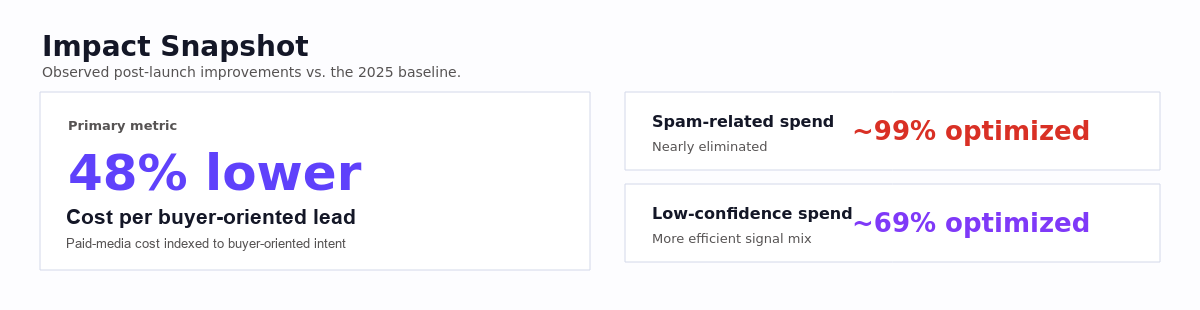
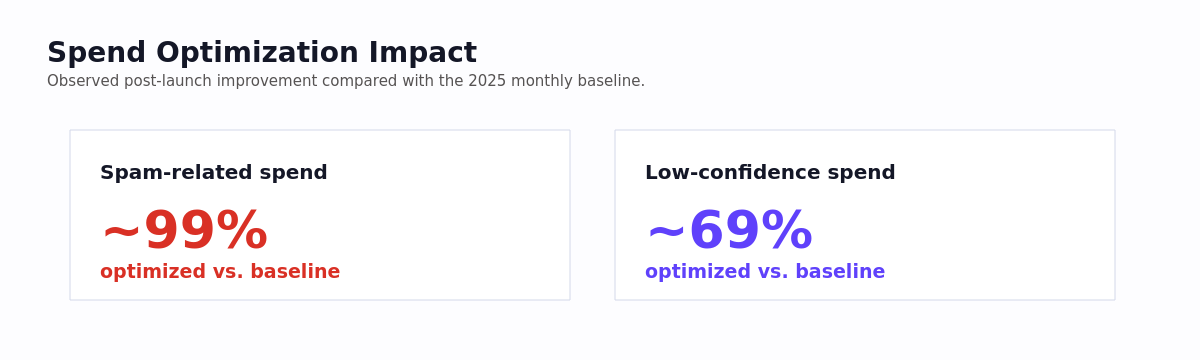
The result was a more precise optimization feedback loop centered on qualified buyer signals. During the observed post-launch window, cost per buyer-oriented lead improved by 48%, high-confidence spam-related spend was nearly eliminated, and broader low-confidence spend improved by approximately 69%.
Client Quote
“Spike AI helped us turn paid-search form fills into a much cleaner acquisition signal. By separating buyer-oriented inquiries from creators, vendors, spam, and unclear requests, we could optimize around the leads that actually mattered. ”
— The Shelf
1. Introduction
The Shelf operates in a category where paid-search intent can be mixed. A form submission can represent a brand buyer, a creator looking for opportunities, a vendor outreach message, or an unclear request. For growth teams, the challenge is not simply increasing form-fill volume, but correctly identifying buyer-oriented submissions so optimization systems are learning from the right conversion signals.
2. The Problem
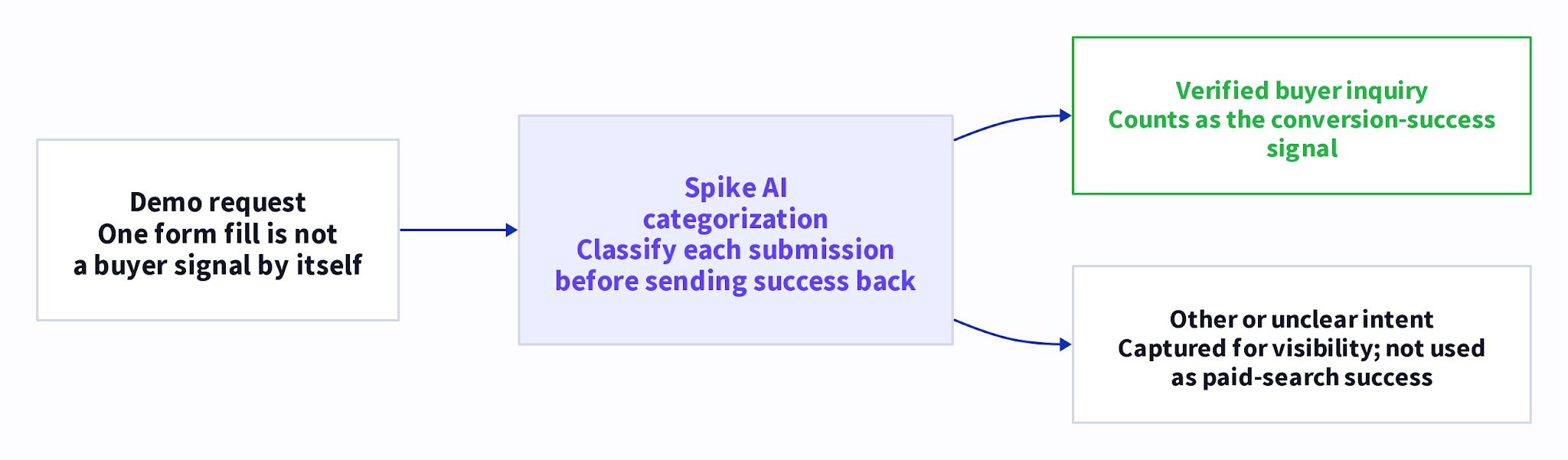
Paid search can only optimize toward the conversion event it receives. If every form fill is treated as the same success signal, the platform can overvalue activity that does not align with the business outcome the team is actually trying to drive. The Shelf needed its conversion feedback loop to distinguish buyer-oriented inquiries from other types of form activity while preserving visibility across the broader funnel.
3. Spike AI’s Discovery
Spike AI identified an opportunity to improve conversion signal quality by introducing lead categorization before conversion feedback was sent back to the upstream platforms. The opportunity was not simply generating more traffic or increasing raw form-fill volume. It was improving conversion signal quality: classify the submission first, then reward the platform only when the form fill represents a buyer-oriented inquiry.
4. Results
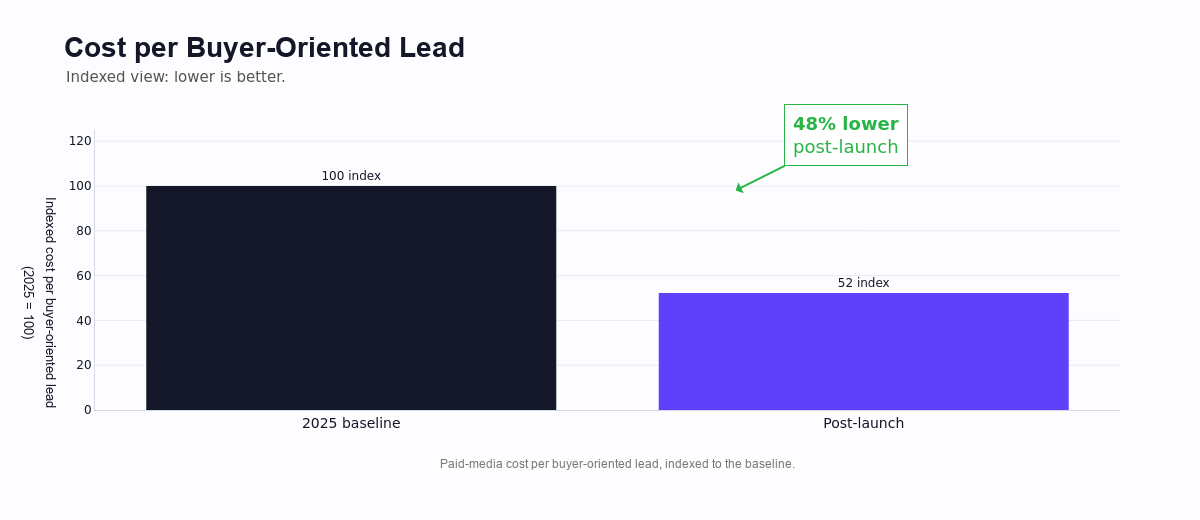
The primary outcome was a 48% improvement in cost per buyer-oriented lead during the observed post-launch window. To preserve confidentiality around spend levels, the chart below uses an indexed comparison, with the 2025 baseline set to 100 and post-launch performance measured relative to that benchmark.
The same categorization layer also improved paid-search spend efficiency by reducing the share of spend tied to low-confidence signals. This gave the team a cleaner view of what paid search was actually producing and a stronger foundation for future optimization.
5. Key Takeaways
• The most valuable performance metric was buyer-oriented lead activity, not raw form-fill volume.
• Lead categorization improved the quality of conversion signals being sent back to paid-search platforms.
• Separating buyer inquiries from creators, vendors, spam, and other inbound activity helped paid-search optimization better align with business goals.
• The approach can be applied to any business where website forms capture multiple types of inbound intent.
6. Conclusion
Spike AI helped support a more precise paid-search optimization framework by introducing lead categorization before conversion data was passed back to advertising platforms. This gave The Shelf better visibility into buyer-oriented activity, improved reporting clarity, and a stronger foundation for optimizing paid media toward qualified inbound interest.