Rytr Pricing 2026: What Each Plan Actually Costs Per Blog Post, Email, and Ad
TL;DR
- Rytr's Free plan offers ~1,500 words/month, enough for one test article. The Saver plan ($9/mo) offers unlimited text generation but gates key features. The Unlimited plan ($29/mo) adds a dedicated manager and more plagiarism checks.
- The real metric isn't the monthly fee but the cost per usable asset. For short-form content like ad copy, Rytr is highly cost-effective. For long-form blog posts, the required 30-50% editing time makes the true cost much higher than the subscription price suggests.
- Hidden costs include limited plagiarism checks (forcing a separate subscription), significant editing labor for long-form content, and productivity loss from a lack of CMS integrations.
- Compared to competitors, Rytr's Saver plan wins on price for low-volume solo users. However, ChatGPT Plus ($20/mo) often provides better value due to higher output quality, reducing the significant hidden cost of editing.
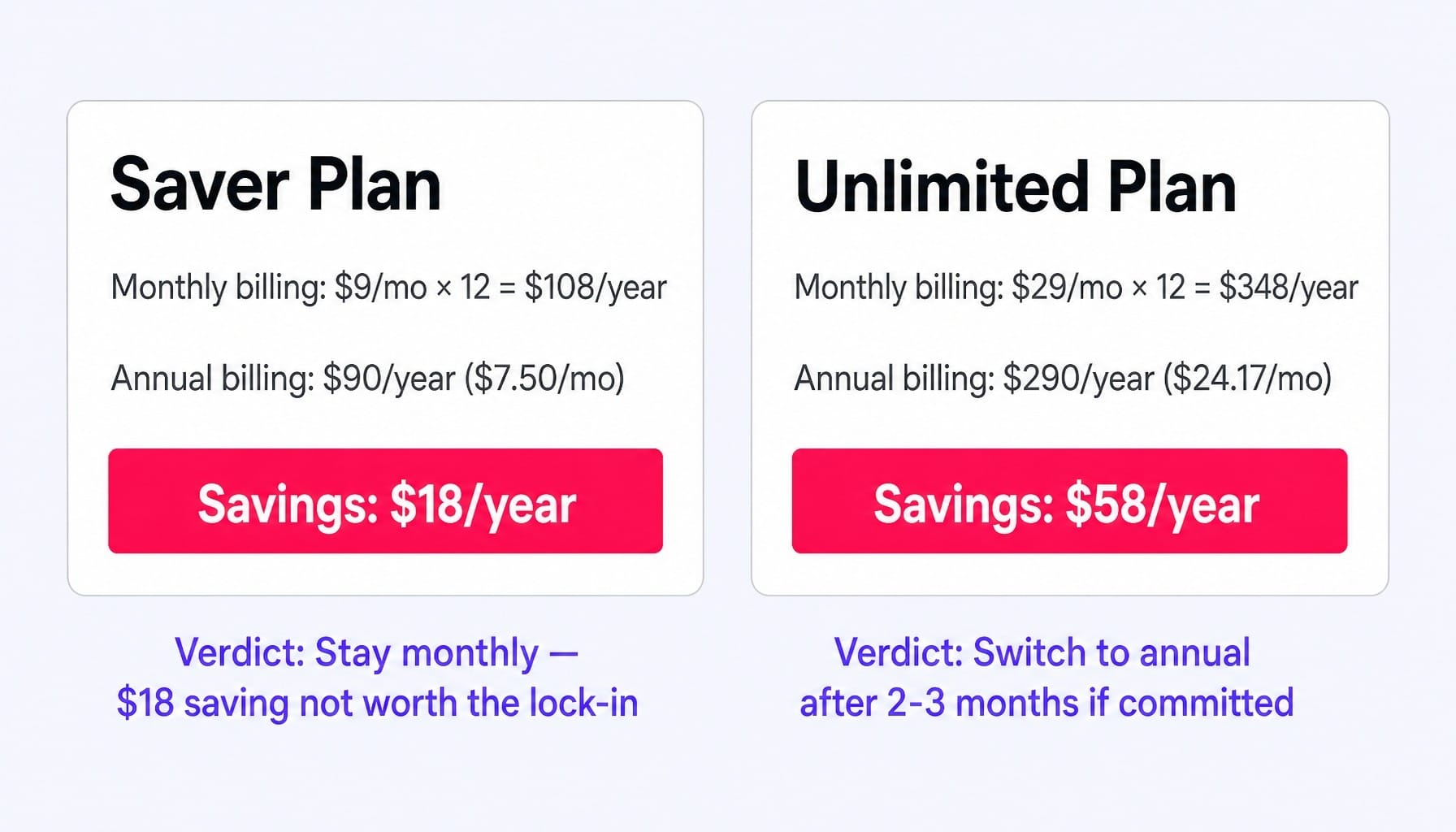
- Choosing an annual plan saves you $18/year on the Saver plan and $58/year on the Unlimited plan. The small saving on the Saver plan makes monthly billing a safer starting point.
Rytr's pricing page presents a clean, simple choice: Free, Saver at $9/month, or Unlimited at $29/month. Most buyers see those numbers, map them to their budget, and make a decision. This is a mistake.
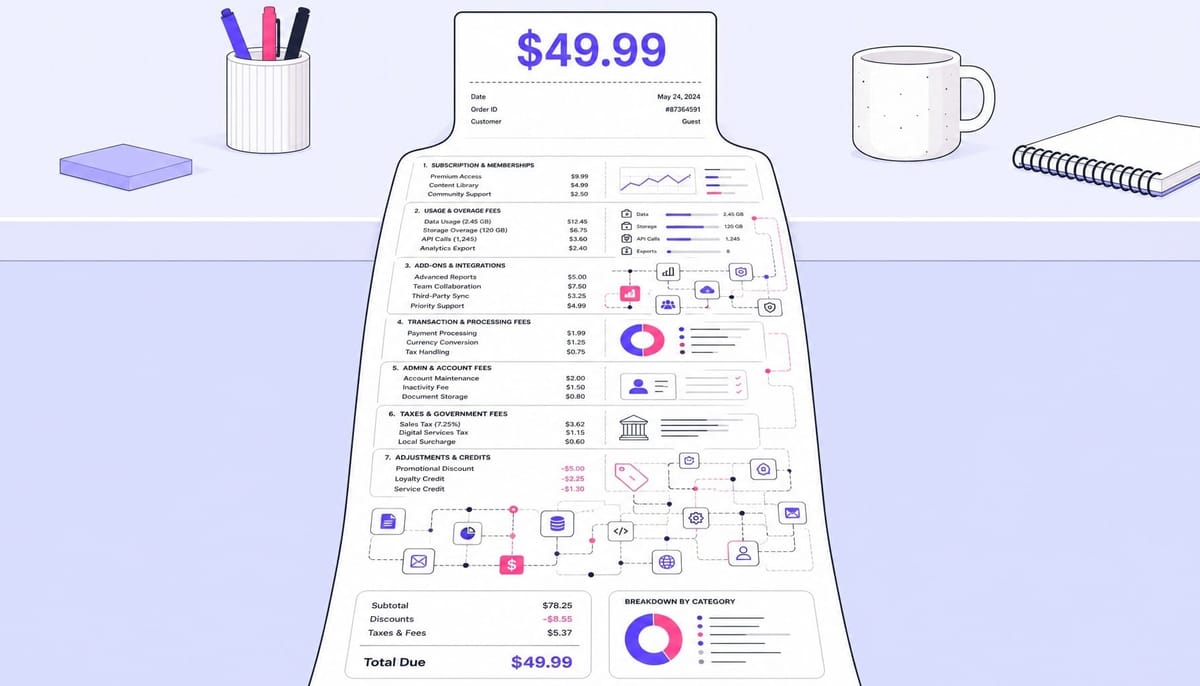
The monthly subscription fee is not the number that matters. The number that matters is your cost per usable output.
How much does a publishable blog post, a polished email sequence, or a batch of ad variations actually cost you after factoring in character limits, editing labor, and feature-gated upsells? That calculation changes the economic picture significantly.
This is the analysis Rytr's pricing page doesn't provide. Here, we'll break down each plan's real-world limits, calculate the true cost per asset, uncover the hidden fees, and stack Rytr's value proposition against four key competitors, including Jasper and ChatGPT Plus.
Rytr's Three Pricing Tiers: What You Get at Each Level
As of 2026, Rytr's pricing is structured into three distinct tiers. The plan names have evolved, but the current structure is straightforward: a free entry point, a low-cost volume plan, and a premium tier for more intensive users. The value isn't in the feature list, but in what the usage ceilings and gated features mean for your workflow.
Tier 1: The Free Plan
The Free plan's 10,000-character limit translates to roughly 1,500–2,000 words. This is enough to generate one solid blog post or a handful of social media updates. It exists to demonstrate the tool's core functionality, not to sustain a content workflow. It's a freemium conversion funnel, designed to show you the tool's potential and get you to hit the usage ceiling within your first few serious attempts.
Tier 2: The Saver Plan
At $9/month, the Saver plan is Rytr's core offering. It removes the character count allocation, which is the primary friction point of the free tier. This is the plan for a freelance writer or a small business owner who needs to produce content at a consistent volume. However, it gates access to a dedicated account manager and priority support, and keeps plagiarism checks capped. For a solopreneur, this is often the sweet spot.
Tier 3: The Unlimited Plan
For $29/month, the Unlimited plan primarily adds service and higher usage caps on secondary features. You get a dedicated account manager, priority email/chat support, and double the plagiarism checks (100/month). This plan is positioned for small agencies or power users who rely heavily on the platform and need faster support and higher limits for client work. The value here depends entirely on your need for support and plagiarism checks, as the core text generation is the same as the Saver plan.
Annual vs. Monthly Billing: How Much You Actually Save
Rytr offers a discount of roughly two free months for users who commit to an annual plan. While a discount is always welcome, the actual dollar value helps determine whether the commitment is worthwhile.
Here's the math for 2026:
- Saver Plan:
Monthly: $9/month = $108 per year
Annual: $90/year (billed once) = $7.50 per month
Annual Savings: $18
- Unlimited Plan:
Monthly: $29/month = $348 per year
Annual: $290/year (billed once) = ~$24.17 per month
Annual Savings: $58
The takeaway is clear. For the Saver plan, the $18 annual saving is negligible; it's barely more than the cost of two months of the service. It makes more sense to stay on a monthly plan to maintain flexibility.
For the Unlimited plan, the $58 saving is more substantial, equivalent to two months of the service. However, it locks you into a 12-month commitment. The most prudent approach is to start with a monthly plan for 2-3 months to confirm Rytr fits your workflow. If it becomes indispensable, then upgrading to an annual plan to capture the savings makes financial sense.
What Rytr Actually Costs Per Blog Post, Email, and Ad
Evaluating an AI writer by its subscription price is optimizing the wrong variable. The metric that truly matters is the cost per usable asset. "Usable" is the key word, as raw AI output almost always requires human intervention. Based on multiple hands-on reviews, Rytr's long-form content requires 30-50% editing time to be publishable.
Let's calculate the real cost per asset on the $9/month Saver plan, assuming a B2B marketer produces 8 blog posts, 20 emails, and 30 ad variations per month.
1. Cost Per Blog Post (~1,500 words)
Rytr can generate a first draft in minutes. But a publishable post requires topic research, structural editing, fact-checking, and SEO optimization that the tool doesn't perform.
- Tool Cost: $9 plan / 8 posts = $1.12 per post
- Labor Cost: At 45-60 minutes of required editing per post, the hidden labor cost is far more significant. The tool cost is a rounding error.
2. Cost Per Email Sequence (5 emails, ~300 words each)
Rytr excels at short-form content. The prompt-to-output ratio is better, and editing is faster—closer to 15 minutes per email for tone and brand voice adjustments.
- Tool Cost: If you generate four 5-email sequences (20 emails total), the cost is $9 / 20 emails = $0.45 per email.
- Analysis: This is an efficient use case where the tool provides genuine leverage.
3. Cost Per Ad Variation (~50 words)
This is Rytr's strongest use case. It can generate dozens of variations for headlines, descriptions, and CTAs with minimal editing required.
- Tool Cost: For 30 ad variations, the tool cost is $9 / 30 ads = $0.30 per ad.
- Analysis: At this price, the cost-per-asset is excellent, making Rytr a powerful tool for performance marketers.
The conclusion is that Rytr's cost-per-asset is outstanding for short-form copy, acceptable for emails, but misleadingly low for long-form content where the subscription price masks the significant hidden cost of editing labor.
Hidden Costs Most Rytr Pricing Comparisons Miss
The monthly subscription is only the first line item. The total cost of ownership for Rytr includes at least three other factors that most reviews overlook.
- Plagiarism Checker Limits: The Saver plan caps you at 50 checks per month, and Unlimited at 100. For an agency producing daily content for clients who require originality reports, this limit can be exhausted by the second week of the month. This forces an additional subscription to a tool like Copyscape or Grammarly Premium, adding another $15-30/month to your stack.
- Editing & Rewriting Labor: This is the biggest hidden cost. Rytr's output, especially for complex topics, requires substantial human editing. If a content editor costs your team $50/hour, spending 45 minutes to fix a Rytr-generated blog post adds a $37.50 labor cost to that single piece of content. This completely dwarfs the ~$1 tool cost per post and is the most frequently ignored part of the ROI calculation.
- Integration Friction: Rytr has a Chrome extension but lacks native integrations with WordPress, HubSpot, or other major CMS platforms. Every piece of content requires a manual copy-paste-reformat workflow. For a single blog post, this is a minor 5-minute inconvenience. For a team producing 50+ assets per month, this friction compounds into hours of lost productivity and unbilled administrative labor.
Rytr vs. Jasper, Copy.ai, ChatGPT Plus, and Writesonic: Price Comparison
Comparing AI writers on price is complex because each meters usage differently. Rytr uses character limits (on its free plan), Jasper uses word counts and seats, and others use credits. The table below normalizes these for a clearer view, followed by the crucial interpretation.
The table tells a story. For a solo user focused on short-form content, Rytr's $9 Saver plan is the clear winner on sticker price. But value is different from price.
The most important crossover point is with ChatGPT Plus. At $20/month, it seems more than double the price of Rytr's Saver plan. However, because its underlying model (GPT-4) produces higher-quality, more nuanced long-form drafts, the editing time is significantly reduced. For a content marketer producing 4-8 blog posts per month, the time saved on editing often makes ChatGPT Plus the cheaper option on a total cost basis (tool + labor).
Read more: Jasper vs. ChatGPT: I Ran Both on a Marketing Team. Here's What Actually Matters | Spike
For teams, the math is different again. Jasper's $49/seat price seems steep compared to Rytr's $29 Unlimited plan. But Jasper is built for team collaboration with features Rytr lacks. You're paying for a different product category.
Read more: Jasper vs. Copy.ai: A Practitioner's Breakdown of What Each Tool Actually Delivers in 2026 | Spike
Ultimately, Rytr wins on sticker price for solo users with short-form needs. It loses on value-per-dollar for anyone producing research-heavy, long-form content or requiring team features.
When the Real Cost Isn't the Writing Tool — It's the Optimization Gap
The entire conversation around AI writing tool pricing, including this analysis of Rytr, focuses on reducing the cost of content production. But the most expensive part of content marketing isn't drafting—it's the strategic guesswork and manual optimization required to make that content actually convert.
A $9/month tool produces drafts. Drafts don't generate pipeline. The real execution gap is between "content exists" and "content converts." This is where most marketing teams hemorrhage budget—on agencies, siloed consultants, and manual A/B tests, all trying to fix a problem one channel at a time. Spike AI is built to close that specific gap. Instead of helping you write more content faster, it identifies which changes across your website, SEO, and ads will move qualified leads most, then helps you ship those changes weekly. The most expensive content isn't the content you pay to produce—it's the content that sits on your site without converting.
See how Spike AI turns existing content into conversions — book a discovery call
Is Rytr Worth the Price in 2026?
Rytr is absolutely worth its price for the right user. For a freelance copywriter, social media manager, or solopreneur who needs to generate high volumes of short-form content, the $9/month Saver plan is one of the best values on the market.
However, the buyer who evaluates AI writing tools on subscription cost alone is optimizing the wrong variable. The true metric is cost-per-usable-output, a figure that is heavily influenced by content type and the hidden cost of editing labor.
As this analysis shows, once you move from sticker price to total cost, Rytr's value proposition narrows. As the underlying cost of LLM inference continues to fall, the price for tools like Rytr will compress further. The long-term differentiator won't be price, but the quality of the output and the depth of its workflow integration.
Frequently Asked Questions
Is there still a Rytr lifetime deal available in 2026?
Rytr offered lifetime deals (LTDs) via platforms like AppSumo during its early growth phase, but these are no longer officially available. While resales may appear on secondary markets, these are not supported by Rytr and carry risk. You should base your decision on current subscription pricing.
Can I sign up for Rytr's free plan without entering a credit card?
Yes. Rytr's Free plan only requires an email for signup, with no credit card needed. The plan provides 10,000 characters per month and access to most features. Generation simply stops when you hit the limit; it does not auto-upgrade or charge you.
Does Rytr offer API access, and what does it cost?
API access is included in the Unlimited plan at no extra cost beyond the subscription fee. However, usage is subject to the same rate limits as the web app. For high-volume programmatic use, dedicated API providers like OpenAI offer more robust and flexible solutions.
Is Rytr's unlimited plan truly unlimited, or are there hidden caps?
The Saver and Unlimited plans offer unlimited character generation for text. This is the core "unlimited" feature. However, secondary features have caps: plagiarism checks are limited to 50 or 100 per month, and image generation is capped. There are also fair-use policies to prevent system abuse.
Does Rytr offer team or enterprise pricing with volume discounts?
Rytr does not currently publish a formal team or enterprise plan with multi-seat management or volume discounts. Organizations needing access for multiple users must purchase individual subscriptions for each team member. The Unlimited plan's dedicated manager serves as a proxy for premium business support.