9 B2B Content Marketing Examples That Drove Pipeline
These B2B content marketing examples include the tactics, formats, and measurable results that moved pipeline for real SaaS companies.

Key Takeaways
- Focus on Buyer Intent:* A single comparison page targeting buyers who have already decided to spend money often outperforms dozens of top-of-funnel posts.
- Embed the Product:* Product-led content that uses the product as the teaching tool converts at a higher rate.
- Challenge Gating Orthodoxy:* Ungating high-value content can increase qualified pipeline by removing friction and building trust, even if it reduces raw lead volume.
- Fight Content Decay:* Refreshing your highest-converting content is often a higher-ROI activity than creating new pieces.
- Measure What Matters:* Supplement software attribution with self-reported data to capture "dark social" influence.
You've seen the listicles. A blog post gets 50,000 organic visits and is hailed as a success, while a quiet comparison page targeting a competitor alternative gets maybe 2,000 visits but drives 40 qualified demo requests every month. Only the second one pays the bills, yet the first is what usually gets held up among B2B content marketing examples.
The examples worth studying are the ones that produced measurable conversion outcomes: pipeline influenced, demos booked, or customer acquisition cost reduced.
This article skips the vanity metrics. Every example here includes the tactic, the format, and the conversion result that made it matter.
Product-Led Content That Replaced SDR Outreach
The highest-converting B2B content is often the content that does the selling before a sales rep ever gets involved. Product-led content achieves this by embedding the product into the educational narrative, allowing the reader to experience the solution while they learn. Here are two SaaS companies that used it to reduce dependency on outbound sales.
Ahrefs: Free SEO Tools as the Content Strategy
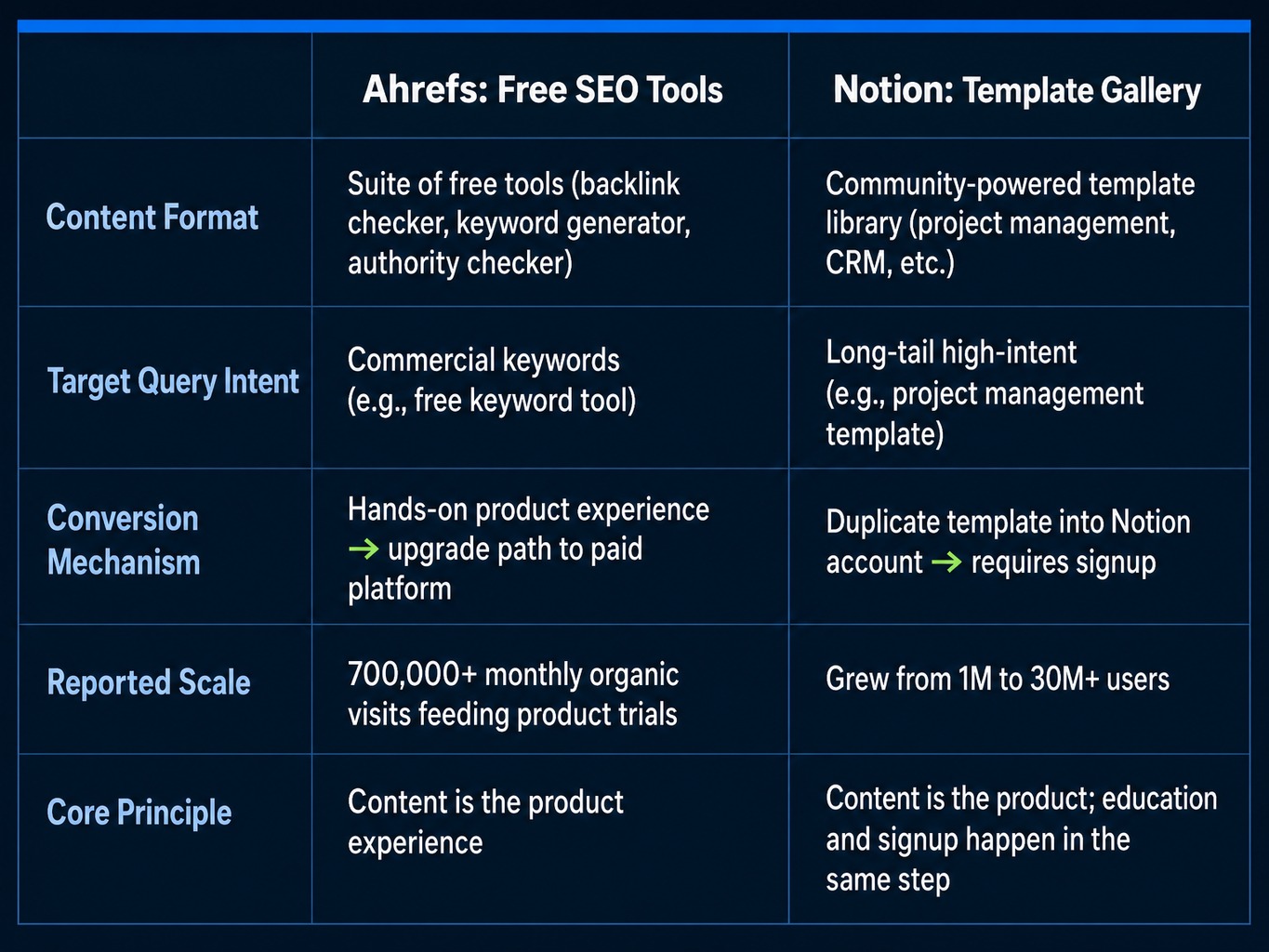
Ahrefs built its content strategy around a suite of free tools, including a backlink checker, keyword generator, and website authority checker. These aren't just lead magnets; they are the content. Each tool ranks for high-intent commercial keywords and serves as a direct, hands-on onboarding experience for the core product.
Ahrefs has publicly shared that its free tools and blog generate over 700,000 monthly organic visits that feed directly into product trials.
Notion: Template Gallery as a Bottom-Funnel Content Engine
Notion's template gallery is a clear example of programmatic content that converts. The company built a community-powered library of templates that ranks for hundreds of long-tail, high-intent queries like "project management template" or "startup CRM template."
Each template is a fully functional solution to a user's problem, but to use it, you must duplicate it into your own Notion account requiring a signup. This simple step makes every template page a conversion asset. This content engine was a primary driver of Notion's self-serve acquisition, helping it grow from 1 million to over 30 million users.
Comparison Pages That Capture Bottom-Funnel Buyers
Comparison and alternative pages target buyers who have already decided to buy something; they are simply choosing between options. That makes them some of the highest-intent content a B2B company can create. The page's job is selection facilitation, not persuasion.
HubSpot: Programmatic Alternative Pages at Scale
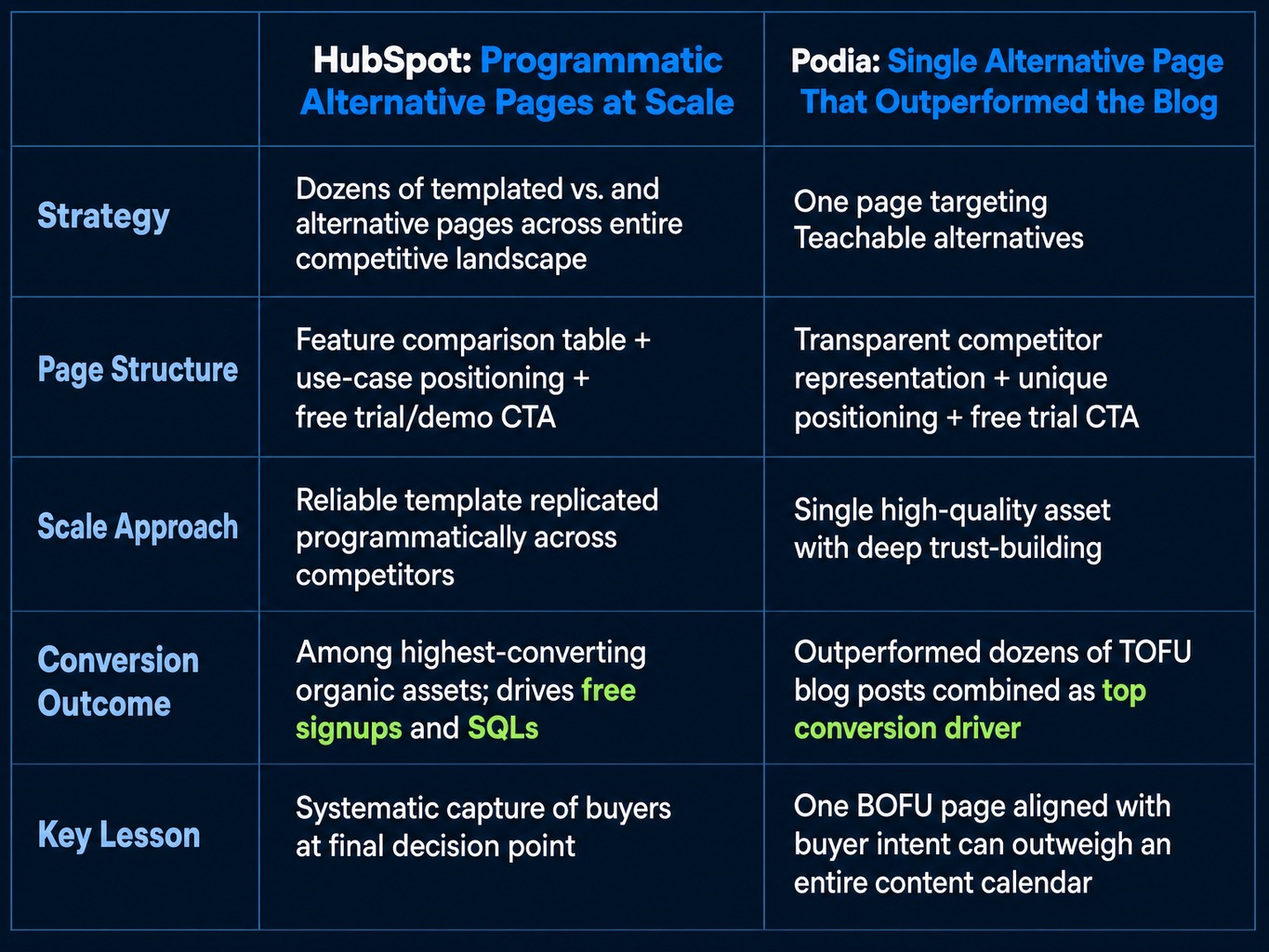
HubSpot executes a programmatic SEO strategy by building dozens of "alternative" and "vs" pages targeting competitor brand keywords, such as "HubSpot vs Salesforce" or "Mailchimp alternatives." Each page follows a consistent, structured format: a feature comparison table, clear use-case positioning, and a prominent CTA to start a free trial or get a demo.
These pages consistently rank for high-intent competitor queries and are known to be among HubSpot's highest-converting organic assets, contributing directly to both free tool signups and sales-qualified leads.
Podia: A Single Alternative Page That Outperformed the Blog
Podia built a single page targeting users searching for "Teachable alternatives." The company has publicly discussed how that page became one of its top conversion drivers, outperforming dozens of top-of-funnel blog posts combined.
The page succeeded because it was transparent, fairly representing competitor strengths alongside Podia's unique positioning, which built trust with a skeptical audience. It then channeled that trust into a free trial CTA.
Ungated Content Strategies That Still Generated Pipeline
B2B marketers have been trained for years to gate their best content behind forms to capture MQLs. But a growing number of SaaS companies are proving that ungating content can actually increase pipeline.
Drift: Removing Every Form and Growing Pipeline
Drift's decision to remove all lead capture forms from its website is one of the most well-documented examples of the ungated playbook. It replaced every form with conversational marketing chatbots and live chat and ungated its entire library of ebooks, reports, and guides.
The company publicly reported that after ungating, it saw an increase in qualified pipeline and faster sales cycles.
Gong: Ungated Research Reports as a Trust Engine
Gong, a conversation intelligence platform, built its brand by publishing original research reports based on proprietary data from sales calls. Critically, these reports are completely ungated.
This approach turned its research into its primary brand awareness and demand generation engine. The outcome is a steady stream of inbound demo requests from high-intent buyers who consumed the research and self-identified as prospects, no gate required.
Content Decay Refreshes That Recovered Lost Conversions
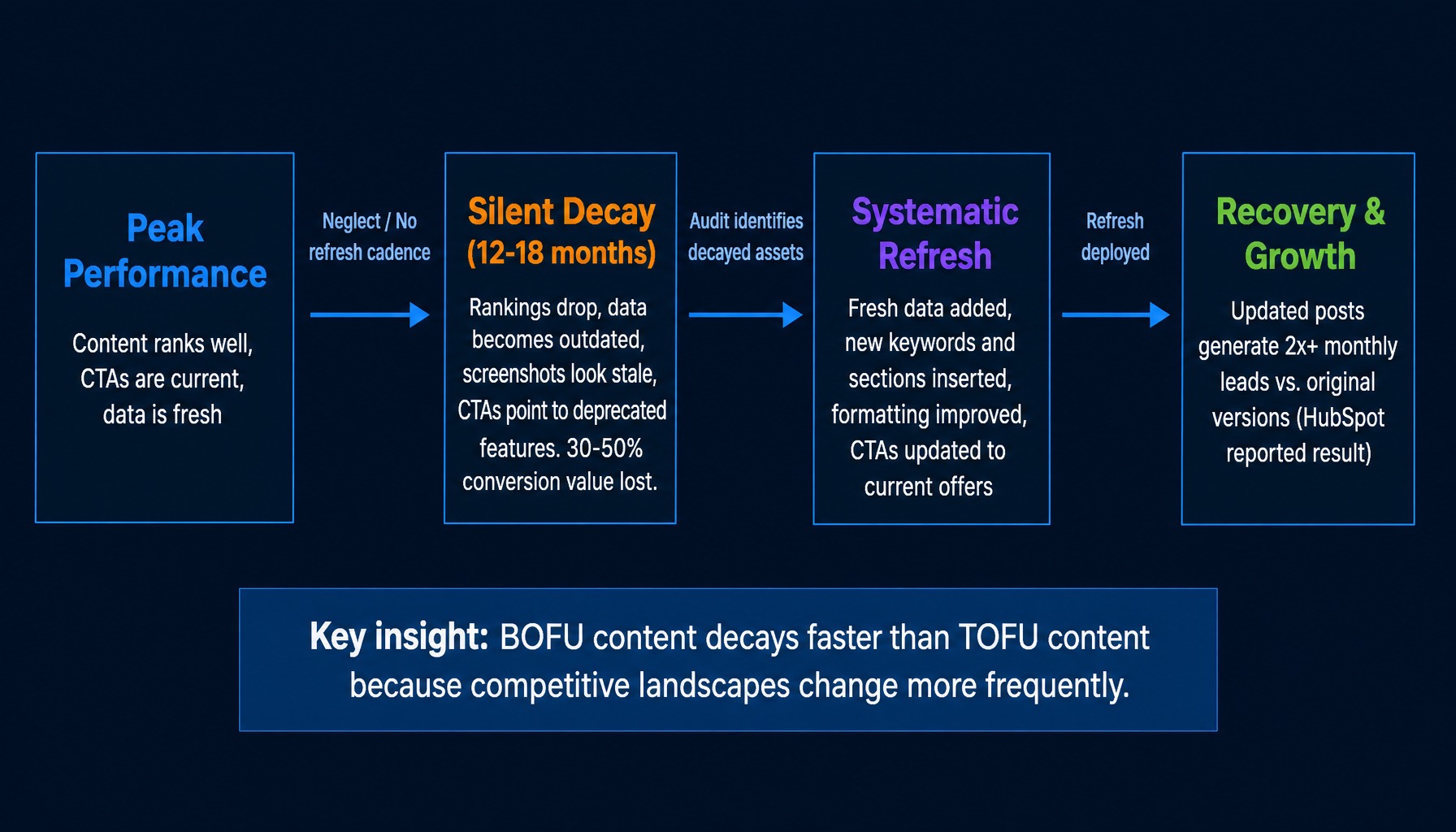
Content that once converted well decays quietly: rankings drop, data goes stale, and CTAs point to deprecated features, costing high-performers up to 30-50% of their conversion value over 12-18 months. Here are two companies that systematically recovered those lost conversions.
HubSpot: Historical Optimization as a Conversion Strategy
HubSpot pioneered the concept of "historical optimization," a program where it systematically updates old blog posts with fresh data, new sections, and more relevant CTAs.
HubSpot has publicly shared that in many cases, these updated posts generated more than double the monthly leads of their original versions.
Nextiva: Refreshing Comparison Pages to Recover Rankings and Conversions
Nextiva, a business communications company, provides a strong example of refreshing high-intent BOFU content. The team ran a content refresh program targeting their comparison and feature pages that had lost organic rankings over time.
By updating competitor data, adding new feature sets to their comparison tables, and refreshing the CTAs, they not only recovered lost organic positions but also saw measurable increases in demo requests originating from those pages.
Dark Social Content That Drove Revenue Without Clean Attribution
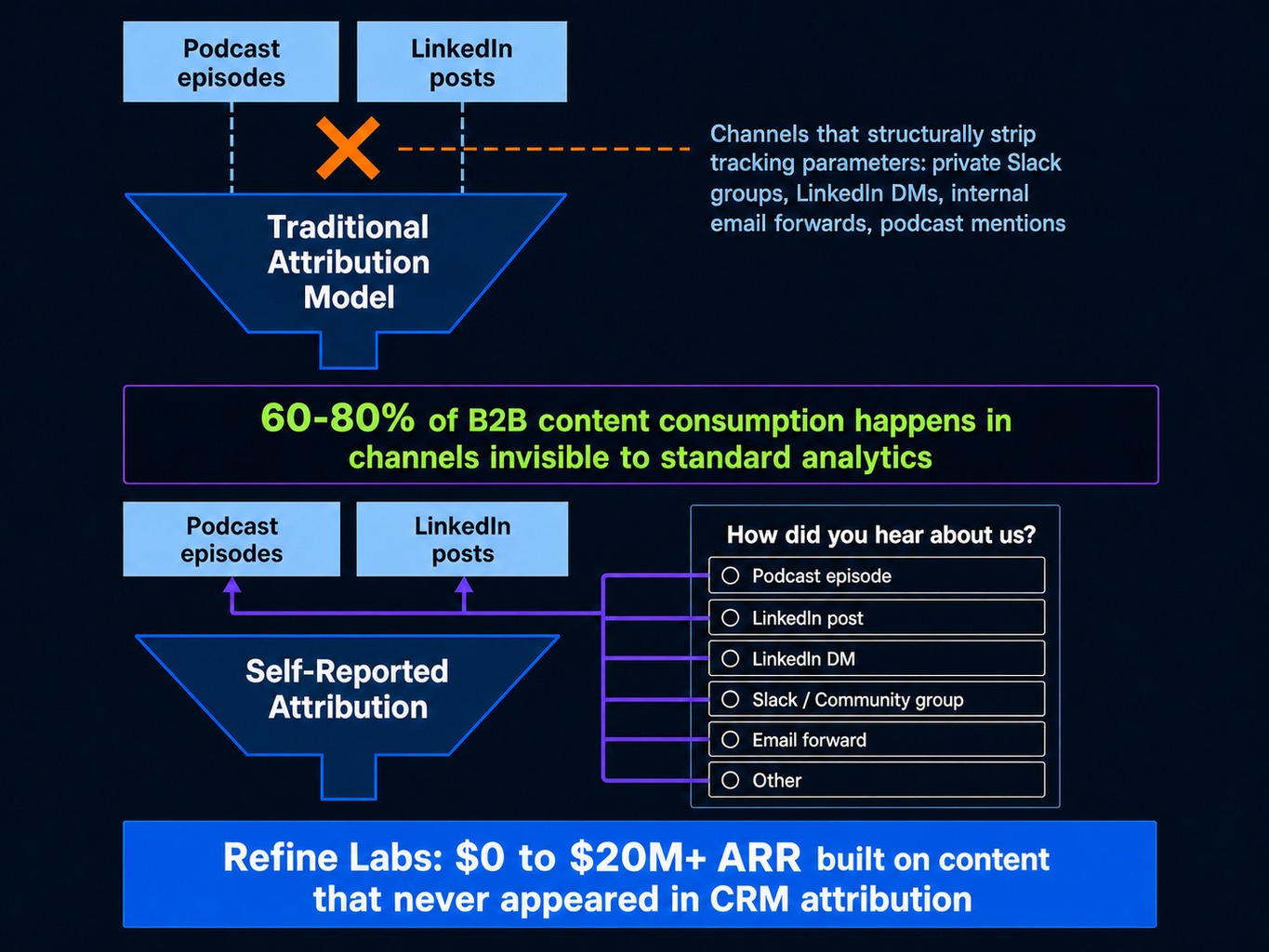
There's an attribution gap at the heart of B2B marketing. A growing share of content influence happens in channels that analytics cannot track: private Slack groups, LinkedIn DMs, internal email forwards, and podcast mentions.
The most visible example is Chris Walker's Refine Labs, which built its business on podcasts and LinkedIn posts that rarely showed up in traditional attribution models. The team asked prospects on demo forms, "How did you hear about us?", and the answers pointed to that content. Refine Labs grew from $0 to over $20M in ARR by building its demand engine around this reality.
Read more: SaaS Marketing Metrics That Actually Inform Decisions (Not Just Dashboards)
The Difference Between Content That's Seen and Content That Sells
The B2B content marketing examples worth studying are rarely the ones celebrated for traffic alone. They are the assets that produce a measurable conversion outcome.
The campaigns that consistently move pipeline meet buyers at their point of decision, remove friction instead of demanding trust, and get refreshed before content decay erodes them.
The next time you evaluate a piece of content, don't just ask how many people saw it. Ask what it converted.
That's the standard Spike AI holds its own work to: our reported result is an 80% conversion rate, though your outcome will depend on your buyers, your offer, and your execution.
Read more: 7 SaaS Content Marketing Examples That Actually Drove Pipeline (Not Just Traffic)
Frequently Asked Questions
1. How often should a B2B SaaS company publish new content versus refreshing existing content?
Most B2B SaaS teams over-index on new content and under-invest in refreshing existing assets. Once you have a library of 50+ published pages, a practical split is focusing 60% of effort on new content and 40% on refreshes.
2. What is the difference between demand generation content and lead generation content?
Demand generation content, like podcasts or ungated research, builds awareness and trust without requiring a form fill. Its goal is to create demand for your solution within your target market. Lead generation content, like gated ebooks or webinars, is designed to capture contact information.
3. How do you attribute revenue to a specific content piece in a B2B SaaS funnel?
Use a combination of methods. Multi-touch attribution software in your CRM can track digital touchpoints across the buyer journey. However, you must supplement this with self-reported attribution a mandatory "How did you hear about us?" field on your demo and contact forms.
4. What content formats work best for account-based marketing in B2B SaaS?
Personalized landing pages, industry-specific case studies, and custom comparison pages tailored to a target account's specific pain points and competitive landscape perform best.
5. What content marketing mistakes do early-stage B2B SaaS companies make most often?
The three most common are publishing only top-of-funnel content with no bottom-funnel assets, gating everything before earning trust, and never refreshing content after publication.