6 Peec AI Alternatives Compared: Which AI Visibility Tool Matches Your Execution Model?
TLDR
- Most teams don't need a better AI visibility *tracker*; they need a shorter path from visibility signals to marketing execution.
- Evaluate alternatives on three criteria: coverage depth (prompt-level data), the signal-to-action gap (how much manual work is left), and composability (how it fits your stack).
- For active optimization, look at Scrunch AI. For prompt-level action plans, MentionBird. For simple tracking, Otterly AI. For enterprise forecasting, Profound. For integrated SEO, SE Ranking. For budget benchmarking, Rankscale AI.
- The standalone AI visibility monitoring category is converging into broader marketing execution platforms, just as SEO tools did a decade ago.
- The teams that win won't have the best dashboards; they'll have the shortest cycle time from identifying a visibility gap to shipping a fix.
You set up Peec AI three months ago. You diligently track your brand’s mentions across ChatGPT and Perplexity each week. You have a dashboard full of visibility data. And you have no idea what to do with it.
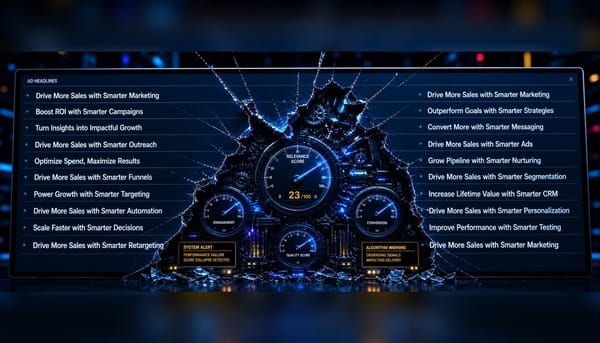
The data shows your brand appears in 12% of relevant AI queries, a number that hasn’t moved in eight weeks. The tool tells you where you stand, but not what to change. This is the core frustration driving teams to search for peec ai alternatives. They aren't unhappy with the data's quality; they're frustrated by the gap between monitoring and action.
Peec AI defined the AI visibility monitoring category, and its core job—tracking mentions—is solid. But defining a category and solving the execution problem are different things. Instead of ranking nine tools by feature count, this guide evaluates six alternatives through the lens of what actually moves the number: how well each tool connects visibility signals to marketing execution.
Why Teams Start Looking Beyond Peec AI
The limitations of Peec AI aren't about data accuracy—they're about what happens after the data is collected. For practitioners, the friction emerges at three distinct points:
- It’s a thermometer, not a treatment plan. Peec tracks AI mentions but offers little diagnosis as to why visibility is low or declining. It confirms you have a fever without suggesting the cause or cure.
- It operates in a monitoring silo. The platform monitors visibility but doesn't natively connect those signals to the content, technical SEO, or site changes that would improve it. The burden of translation from dashboard to backlog item falls entirely on the marketer.
- It creates another dashboard without reducing workload. For lean teams, a standalone monitoring tool introduces another data source to check without adding capacity to act on the findings.
Consider a two-person marketing team at a B2B SaaS company. They see their brand appears in just 8% of relevant Perplexity queries for their category. That insight sits in a dashboard while their backlog of content updates, page optimizations, and technical fixes grows untouched. The monitoring tool added visibility into a problem without adding bandwidth to solve it.
With the AI Overview trigger rate now at 13.14% according to the Omnius AI Search Industry Report 2025, this gap between monitoring and action is becoming increasingly costly. The right alternative depends on whether you need a better monitor or a shorter path from signal to shipped improvement.
How to Evaluate Peec AI Alternatives Without Getting Distracted by Feature Lists
Most comparison articles evaluate AI visibility tools on engine coverage and pricing—the two easiest things to compare and the two least predictive of success. The three dimensions that actually determine whether a tool will help you are rarely discussed. Before looking at specific peec ai competitors, internalize this evaluation framework.
Coverage Depth vs. Coverage Breadth
Tracking eight AI engines superficially is less valuable than tracking four engines with granular data. The critical difference is prompt-level, topic-level, and sentiment-level reporting.
A tool that reports "you appeared in 15% of ChatGPT queries" provides a vanity metric. A tool that shows "you appeared in 3 of 7 purchase-intent prompts for your category, with neutral sentiment and no citation link" provides actionable intelligence. When evaluating platforms, your first question shouldn't be "How many engines do you track?" It should be "What is the granularity of the data you provide for each prompt?"
The Signal-to-Action Gap
The most important differentiator among peec ai alternatives is how much manual work sits between the tool's output and an actual improvement. This is the signal-to-action gap. Platforms exist on a spectrum:
- Pure Monitoring: Provides dashboards and reports (Peec AI, Otterly AI).
- Diagnostic Recommendations: Suggests which content to create or pages to optimize (MentionBird).
- Integrated Execution: Connects directly to content creation or optimization workflows (Scrunch AI).
Where a tool sits on this spectrum determines the internal bandwidth required to extract value. The goal is effective signal-to-stage mapping, where a visibility drop in the tool automatically informs the next action in your marketing plan.
Composability: Standalone Tool vs. Execution Stack
Let's be honest, your team is already running SEO through one platform and CRO through another. Adding a third standalone AI visibility tool risks creating another data silo. Therefore, API ecosystem depth and integration with your existing marketing stack should outweigh standalone feature parity.
A tool that feeds AI visibility signals into your existing prioritization workflow is more valuable than a feature-rich tool that operates in isolation. The critical question is: does this tool compose into my existing GTM content stack, or does it create another tab I need to check every week?
6 Peec AI Alternatives Worth Evaluating in 2026
These six alternatives were selected based on the evaluation criteria above—coverage depth, signal-to-action gap, and composability—not on marketing hype. Each is evaluated for a specific use case where it genuinely outperforms Peec AI, not as a universal replacement.
Scrunch AI — Best for Teams That Need AI-Readiness Beyond Monitoring
Scrunch AI is distinct because it combines AI visibility monitoring with an AI-optimized content layer (its AXP platform). This actively improves how AI engines interpret your site, not just how they mention your brand. This positions it as the strongest option for teams moving beyond passive tracking into active AI-readiness optimization. While Peec tells you where you appear, Scrunch helps restructure your content so AI engines are more likely to cite you accurately. It closes the signal-to-action gap by integrating monitoring with optimization.
- Where it falls short: The platform's breadth comes with a steeper learning curve and a higher price point than pure monitoring tools. It’s a significant commitment.
- Best for: Mid-market and enterprise teams with dedicated content operations who want monitoring and optimization in one platform and require enterprise features like SOC 2 readiness and content governance workflows.
MentionBird — Best for Teams That Want Prompt-Level Action Plans
MentionBird connects AI visibility tracking with specific recommendations for each buyer prompt. It checks selected prompts daily across supported AI platforms and countries. Teams can review mention rate, average position, visibility share, citations, and competitor performance. Its main advantage over Peec AI is the action behind each result. MentionBird reviews the exact AI answer, cited sources, and competing brands. It then recommends clear work, such as improving product pages, publishing guides, adding schema, or pitching trusted reviewers. Each suggestion includes reasoning, source links, and an effort estimate. Teams can also export data or connect it with ChatGPT, Claude, etc.
- Where it falls short: The Starter plan focuses only on ChatGPT and Gemini. And as each prompt run creates processing costs, MentionBird does not offer a free trial.
- Best for: SEO and AEO teams that need prompt, specific guidance. It also suits agencies managing multiple brands and country-based campaigns.
Otterly AI — Best for Lean Teams That Want Simple, Focused Tracking
Not every team needs a full-fledged platform. Some just need a clean, focused tracker that answers, "Where do we show up in AI search?" without the complexity. Otterly AI fills this role exceptionally well with its simple Brand Visibility Index and Link Citations Analysis. Its advantage over Peec is faster setup, a simpler interface, and a focus on explaining why AI engines cite certain content (via its content interpretation analysis), rather than just reporting that they do.
- Where it falls short: Otterly lacks the deep competitive benchmarking and broad multi-engine coverage of larger platforms. It is a monitoring tool, not an optimization platform.
- Best for: Solo marketers or 1-2 person teams at early-stage companies who need directional AI visibility data without a complex onboarding process or a hefty price tag.
Profound — Best for Enterprise Teams Requiring Predictive Intelligence and Compliance
Profound is the only tool in this category that heavily emphasizes predictive analytics—forecasting where AI visibility is heading, not just where it is today. This makes it uniquely valuable for enterprise teams that need to plan quarters ahead and present forward-looking data to leadership. Its key advantages over Peec include hourly refresh rates, agent-based crawlers that simulate real AI engine behavior, and trend analytics that identify emerging query patterns. Its SOC 2 Type II compliance is non-negotiable for many in regulated industries.
- Where it falls short: The enterprise pricing and complexity make it overkill for most teams under 10 people. Its predictive models also require sufficient historical data to be useful, so new brands may not see value immediately.
- Best for: Enterprise marketing and brand teams in regulated sectors like fintech and healthtech that need boardroom-ready reporting backed by robust compliance documentation.
SE Ranking AI Visibility — Best for Teams Already Running SEO in SE Ranking
This is the composability argument in practice. If your team already uses SE Ranking for keyword tracking, site audits, and competitive analysis, adding their AI visibility module eliminates the silo problem. AI visibility data sits alongside your existing SEO data, allowing you to see how traditional search rankings and AI mentions interact for the same queries. The advantage over Peec is clear: no additional tool to manage, unified reporting, and the ability to correlate AI visibility changes with SEO actions taken in the same platform. Its multi-language support is also a genuine differentiator for international teams.
- Where it falls short: The AI visibility module is newer than dedicated tools, so its depth of AI-specific analytics (like sentiment analysis or prompt-level tracking) may lag behind specialists like Scrunch or Profound.
- Best for: Teams already invested in the SE Ranking SEO suite who want to add AI visibility without adding another vendor to their stack.
Rankscale AI — Best for Competitive Benchmarking on a Budget
Rankscale AI’s credit-based pricing makes it the most accessible option for agencies or teams needing competitive AI visibility benchmarking without an enterprise subscription. Its daily tracking cadence and head-to-head competitor comparison features are designed for teams who care more about relative positioning than absolute visibility scores. The key advantage over Peec is more granular competitive benchmarking at a lower entry price, with easy CSV exports for custom reports or BI tool integration.
- Where it falls short: The credit model can become expensive if you're tracking many brands across many engines at scale. The platform also lacks the content optimization features of tools like Scrunch.
- Best for: Agencies and consultancies that need to benchmark multiple brands against competitors with flexible, usage-based pricing. If you're an agency managing 10+ client brands, this should be on your shortlist.
Where AI Visibility Monitoring Is Heading: From Dashboards to Execution Loops
The AI visibility monitoring category is barely two years old and is already fragmenting into dozens of tools. This pattern is familiar. It’s exactly what happened with SEO tools, CRO tools, and analytics platforms. Each new marketing technology category begins as a collection of standalone dashboards before consolidating into broader execution platforms.
The same convergence is happening now. As AI referral visits grow from 1.1 billion to multiples of that, according to Similarweb, AI visibility is becoming too important to treat as a side dashboard. It's becoming a feature within comprehensive marketing execution systems, not a standalone product category.
The most valuable AI visibility data is data that triggers an action—a content change, a technical optimization, a competitive response—without requiring a human to manually translate dashboard metrics into a project plan. Teams that treat AI visibility as another monitoring silo will accumulate data without improving outcomes. They will repeat the mistake of teams from a decade ago who tracked keyword rankings without connecting them to a content strategy, accumulating dashboards without growing traffic.
Why Spike AI Approaches AI Visibility as an Execution Problem, Not a Monitoring Problem
If you've been evaluating AI visibility tools and keep asking, "What happens after the dashboard?"—that's the problem Spike AI was built to solve. The article above diagnoses a core tension: monitoring tools generate data, but the gap between that data and a shipped marketing improvement remains entirely on your plate.
Spike AI is not another Peec AI alternative; it's the execution layer that makes monitoring data actionable.
Our system doesn't just track visibility signals. It unifies them across SEO, AEO, CRO, and ads into a single, prioritized execution queue. We operate as a closed-loop system: detect what's constraining growth (like a drop in AI visibility), model the impact of a fix, ship the change, and measure the result. This weekly shipping cadence is the mechanism that closes the signal-to-action gap for good. Where other tools hand you a dashboard and more homework, Spike AI turns your marketing backlog into a weekly release cycle.
See how Spike AI turns AI visibility signals into shipped improvements — book a discovery call.
Conclusion
The right peec ai alternative isn't the tool with the most features or the lowest price. It's the one that minimizes the distance between seeing your AI visibility data and shipping an improvement. Peec AI defined the category, but the market is maturing beyond standalone monitoring. When you evaluate your next tool, use a framework that prioritizes coverage depth, the signal-to-action gap, and composability over simple feature checklists.
As AI-driven search grows, the marketing teams that win won't be the ones with the most comprehensive dashboards. They will be the ones with the shortest, most repeatable path from insight to execution.
Frequently Asked Questions
Is Peec AI accurate enough to use as a baseline before switching to an alternative?
Peec AI's methodology provides directional accuracy for brand mention tracking across major AI engines. It's reliable enough to establish a baseline, but you should run both tools in parallel for at least two weeks to calibrate any differences in how each platform counts and categorizes mentions.
How many AI engines does a visibility tool need to cover to be useful?
For most B2B teams, covering ChatGPT, Perplexity, Google AI Overviews, and Gemini captures the majority of AI-driven discovery. Tracking 8+ engines sounds comprehensive but often adds noise. Prioritize depth of tracking on the engines your buyers actually use over breadth across engines they don't.
Can I use a free tool to monitor AI visibility instead of paying for a Peec AI alternative?
A few tools offer limited free tiers, but these typically restrict the number of tracked queries, engines, or competitors. For directional awareness, a free plan works. For competitive benchmarking or trend analysis that informs content strategy, the data limitations make free plans insufficient within weeks.
How often should I check AI visibility data to make it actionable?
Weekly reviews are sufficient for most teams; AI visibility shifts more slowly than paid search metrics, and daily checking creates noise without actionable signal. The more important cadence is how quickly you act. A monthly review paired with immediate content changes outperforms daily dashboard checks with no follow-through.
Do any Peec AI alternatives integrate directly with CRM platforms like Salesforce or HubSpot?
Most standalone AI visibility tools do not offer native CRM integrations, as they are built for marketing and SEO teams. SE Ranking and Profound offer the closest adjacency through API access and exports that can feed into BI tools. If CRM-synced analytics is a requirement, a broader marketing execution platform may serve you better.